Thursday, October 29, 2015

Halloween Popcorn Party

As a little girl, I loved this Halloween book called Popcorn by Frank Asch. When I went to look for it as a teacher, I couldn't even find it at the library because it had been out of print for a long time. I found out recently that it has been published again and bought my own copy- mostly out of nostalgia.
I'll be honest, after reading the story again with my adult eyes, I can't say it impressed me as much as it did when I was a little girl. But I do still think it's fun to imagine popping so much popcorn that it fills up a whole house. And the story can lend itself to some great discussions about choices, consequences, and problem solving- if you are looking for a way to make the read more meaningful. Sometimes though, I think it's also great to read silly stories that are just for fun. After we read it, we made popcorn for our own Halloween snack.
Popping popcorn is one of my favorite ways to introduce the five senses, and reading this book gave us a good excuse to do just that. So we focused on using our five senses as the popcorn cooked in the air popper. First we could hear it and smell it, and then we could see it popping out of the top. After it was finished, we touched it and tasted it as we ate it.
It was our own little Halloween popcorn party...but luckily we made just the right amount so that we didn't have to eat a whole house-full like in the book. :)

Tuesday, October 27, 2015

Spiders and Webs

Along with some Halloween activities this week, we've also been learning a little bit about spiders.

"Spider Eyes" Sensory Bin and Counting
The first part of this activity is scooping up the googly spider eyes from the bin.
Some students were engaged with that process alone, and spent their time just exploring the bin. 
Some students took it a step further, and brought their eyes to the spider building table. 

Earlier in class we talked a little bit about the number of legs and eyes that spiders can have. Many spiders have 8 eyes, but that number can vary depending on the species. It was fun to see the different ways that the students made their spiders.

Spider Web Marble Art
This is one of my favorite art processes. Just dip the marble in paint, and roll it around to create a unique web.

Later we added some spiders. 

Spider Web Lines
Spider webs have been another fun way to think about lines. We explored the straight and curvy lines in spider webs on the chalkboard table. I drew the outline of the web, and the students filled in the rest. 

This inspired one student to try making his own web with the chalk outside. 

Spider Web Yarn 
I had planned to make several different spider webs out of yarn in the classroom to use for a spider hunting/counting/sorting activity, but it was hard to find places that would work.

So I changed my mind, emptied out this shelf, and set out several different strings for the kids to explore on their own. They worked hard to create their own spider webs. 


Book: The Very Busy Spider by Eric Carle
This is a simple and fun book that shows the process a spider might go through to spin their web. I love that the lines of the web are raised, so that students can explore the lines in a tactile way.

Thursday, October 22, 2015

Field Trip to the Fire Station

As part of our fire safety week, we went on a field trip to our local fire station. It was such a great learning experience!

The firefighters did such a great job showing us around the station and talking to us about fire safety.
The kids were especially excited to see the fire trucks. They were even able to sit inside!
They also showed us all the equipment and tools that they keep inside the trucks to use in emergencies. It's amazing how much they carry! Then one of the firefighters showed us how fast they have to get dressed in all their gear before a fire.
He also showed us how they breathe with oxygen masks when they go into a burning building. I thought it was so great for the kids to see that so these helpers would hopefully appear less scary in an emergency situation.

Thanks to the fire station for a fun morning- and for all the work they do for our community!

Fire Safety in Preschool

This week we learned about fire safety and firefighters.

Sensory Bin: Spraying Fire
Our sensory bin was filled with spray bottles and foam "fires" to spray.

Building and Dramatic Play
We also had "fire blocks" in the block center, that led to some dramatic play with putting out the fire in a building like a firefighter.

(He's using a cardboard tube like a hose to put out the fire)

Fire Art
We mixed yellow and red finger paint to create orange fire art.

Fire Safety
We also talked about fire safety in the preschool and at home. We located our smoke detector and fire extinguisher, and practiced the things to do in case of a fire. One simple motto that we practiced was:
"Don't Hide, Go Outside!"

To top it all off, we took a field trip to the local fire station to learn more about the firefighters in our community.

Saturday, October 17, 2015

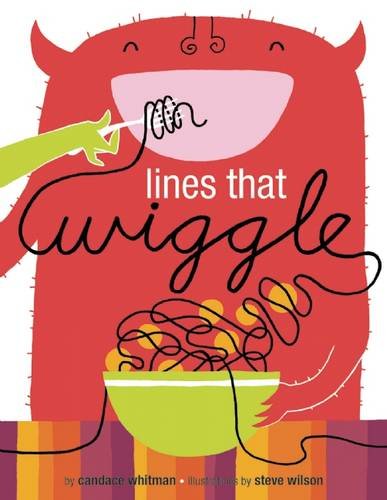
Book Love: Lines that Wiggle

I am always looking for good literature to support the topics that we are exploring in our classroom. More often than not, I find myself adapting books slightly to meet the needs of my age group or to fit the specific focus that I am trying to emphasize. But every once in awhile, I find a book that is EXACTLY what I'm looking for.
Title: Lines that Wiggle
Author: Candace Whitman
Illustrator: Steve Wilson

Why I Love this Book: I came across Lines that Wiggle as I was searching for some new ways to teach about working with lines as an early literacy skill. The text in this book is simple, which allows the creative and whimsical illustrations to shine. The lines in the book are raised, offering an additional tactile experience for the reader. Some of the lines are a part of pictures that are more imaginative, while some point out lines on real-life objects, such as leaves, sprouts, and animals. I loved that this book drew attention to different kinds of lines in fun and yet meaningful ways. For my teaching purposes, it is a perfect book to introduce lines to my students and get them excited about noticing them before we focus more exclusively on how lines make up letters, numbers, and shapes.

Read-Aloud Tip: This book lends easily lends itself to incorporating movement as you read. I encouraged my students to try to make different lines with their hands, arms, and bodies throughout the book. I used prompts like "Show me a line that wiggles!" or "Use three fingers to make a line in threes." 

Connection Activities: After we read the book, we did a quick "line hunt" to find lines in the classroom. It only lasted a few minutes, but there was a lot of enthusiasm and excitement about realizing that lines are everywhere!

There are a lot of different ways you could turn lines into art, but we chose to do a line page in our writing journals. The students used lines to draw anything they wanted, and then told me about what they created.

Related Posts Plugin for WordPress, Blogger...