Showing posts with label Socio-Emotional Development. Show all posts

Wednesday, September 27, 2017

Book Love: Should I Share My Ice Cream?

I just love Elephant and Piggie books, and really anything written by Mo Willems. So I take any chance I can to fit them into our curriculum. This book was perfect to read during birthday week and helped us talk about what sharing looks like in preschool- something we will continue to address all year long... :) 


Connecting Activity: I can't take credit for this activity, and adapted it from something I found here. We tried it passing or sharing our ice cream with balloons, which was extra tricky, but we had a bunch of balloons out since it was birthday week. There were a lot of smiles, and it was also a great activity to get the kids talking to each other. I loved the chance it gave us to practice asking to share with someone in a fun, no-pressure way.


Dramatic Play Connection: I set out our ice cream cones, pom poms, and scoopers in the dramatic play area, and the students became really engaged in making, "selling," and sharing their ice cream. One group even built an "ice cream house," where they made the ice cream and then scooped it out to give it away. :)


Wednesday, March 8, 2017

Kind Friends in Preschool

Also during the month of February, we tried to highlight ways that we can be kind and caring friends.
Sometimes with this age group, relationships seem to be constantly teetering back and forth between completely joyful play and dramatic conflict. Their emotions are so big, and their ability to self-regulate is still just beginning, and so happy moments often suddenly erupt into emotional outbursts. As a teacher, I try to focus on teaching kids how to handle the situations that often cause these conflicts, and at the same time celebrate the moments when their naturally kind and loving hearts shine through.


We read two books this month that specifically helped us to visualize kindness and friendship in different ways.

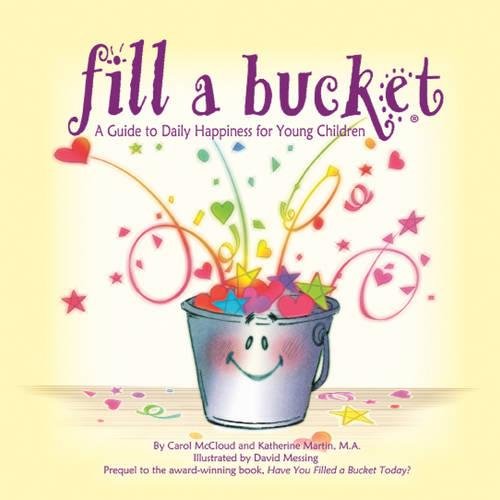
Fill a Bucket

The elementary school I worked at used this series as a guide for encouraging acts of kindness, and I love that this book makes it a little more accessible for younger children. We played a bucket filling math game as a connecting activity. We also had some buckets for filling in the water table.


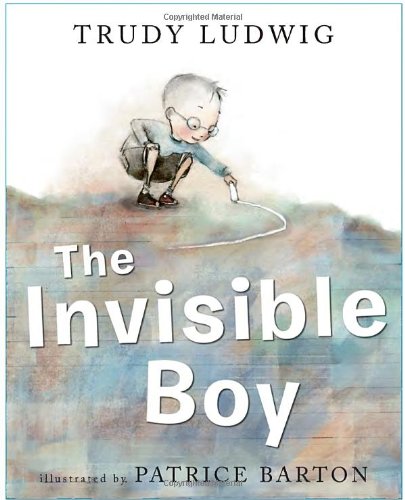
The Invisible Boy

This book was new to me this year, and I wondered if the concepts were a bit mature for my preschoolers, but we were able to connect to it in our own way.

We created invisible friend art by drawing in white crayon on white paper.

I also wrote the name of a secret invisible friend for each student to find.


Then we painted over the paper with watercolor to reveal the invisible lines.

 After they finished, they gave their completed creation to the friend they found on their paper.


  Many students wanted to continue exploring the process after we were finished.

Thursday, February 25, 2016

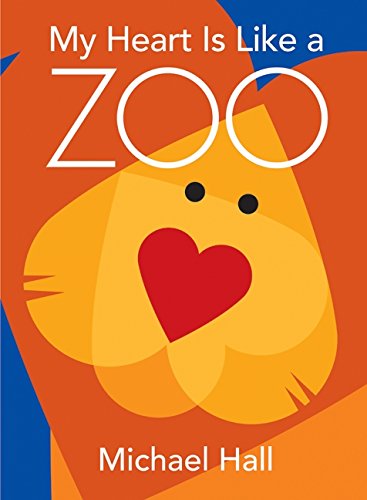
Book Love: My Heart is Like a Zoo


My Heart is Like a Zoo by Michael Hall is a simple book that can be used in many different ways. The adorable and creative illustrations are made out of hearts, which can make it a fun read for Valentine's Day. But the story can also lend itself as a book to talk about different animals, or different ways that we feel or see ourselves.

Read-Aloud Tips: We read this book two times together as a class. The first time, we focused on the hearts in each illustration. Sometimes we counted them, sometimes we just talked about what shapes or parts of the animal they formed. The second time we read it, we focused more on the story itself and the feelings involved. For example, we discussed feeling vocabulary words like what it means to be "eager as a beaver."  Or we made connections to feelings, like thinking about times we've felt "angry as a bear." It's a great book for sparking discussions about feelings.


Extension Activity: I fell in love with this book back in my Kindergarten teaching days, and I've always wanted to use it as inspiration for some animal art. This year was finally the year that I made it happen! I just cut out a bunch of hearts in different shapes and sizes, and let the kids use the book as a guide for ideas. It was fun to see what they created!

I encouraged the kids to label their picture with the name of the animal they created, and I was pleased to observe some great sound spelling. I then used their animals to create a zoo art display.


Monday, February 22, 2016

Playing Post Office

First, you need to write some letters and put them on an envelope with a stamp.

Don't forget to write the name of the person you are sending it to on the envelope.

Then you stick them in the mailbox.

When it's pick-up time, you bring the letters to the post office for sorting.

Then deliver them to the correct individual mailboxes.

This dramatic play has been so great for:
*Writing practice
*Fine motor skills like putting paper in envelopes and using stickers
*Working together with others while sorting and delivering the mail
*Thinking about others in a caring way

I especially loved watching some great friendship skills in action during this play, like asking someone what their favorite color is so they could use it on their letter or drawing a picture of something they knew their friend liked.

Thursday, February 18, 2016

Cooperative Games: Hoot Owl Hoot!

As part of our overall theme of friendship and community this month, I've been inviting the kids to join me in playing different kinds of games. Games are not only a fun way to reinforce many kinds of academic skills, but they provide a great context for practicing social skills like turn taking, self-regulation, and problem solving. This cooperative board game, Hoot Owl Hoot!, has become one of our favorites. Here is what I love about using this game in the classroom.

1. It's accessible, yet provides some challenge
The pieces of the game move according to a visual color cue/picture on the cards, so students of different reading/math levels can play together easily. However, there are different strategies that can be used to be more successful as a group, and it has been interesting to watch how my students have adapted and changed their strategies over time.

2. Players can join at any time
The cooperative nature of this game means that although everyone takes a turn to move, the pieces are shared by everyone. No one owns or controls a certain piece. So, the number of players in the game can easily vary, even while you are playing. This makes it so great for a choice during center time, because students can join in the game in the middle if they are suddenly interested in it, or if they decide to try a new activity they can leave and it doesn't change or stop the game at all.

3. Supports colors, counting, number sense, and more
Like many board games for young children, this game can be used to practice many different learning topics. But my favorite part of this game is the reinforcement of one-to-one correspondence and directional movement, skills that are important in both math and literacy. The sun moves along a line, one space at a time and the owls follow the spiral line, one color at a time. Following a certain direction and moving only one space at a time is great practice for those skills.

Of course, kids always find ways to use materials according to their interests. One time when we played, it turned into a pattern making session using the colored cards. :)


4. Kids are working together
While I do think it is still important for kids to develop the coping skills that come with playing games where there is a loser/winner, cooperative games provide a wonderful opportunity for kids to feel some camaraderie as they work together to achieve a common goal in the game. Everyone wins and loses together, like a team, and that is a great way to strengthen a feeling of community in the classroom.

Tuesday, February 10, 2015

Book Love: Penguin and Pinecone

I thought Penguin and Pinecone by Salina Yoon was a perfect story for us as we've been discussing friendship, kindness, and love for Valentine's Day coming up.

It is a sweet story that in many ways mirrors young children's curiosity and imagination, as well as their ability to love and give whole-heartedly.


Read-Aloud Tip: I gathered up some pine cones for my class to hold and explore during the read-aloud, much in the same way Penguin does in the story. As the story went along, we also acted out some of the activities that Penguin and Pinecone do together.


Connection Activity - Craft: After the story, I helped the students to make their own friends out of the pine cones they chose. I used hot glue to put eyes and a heart on each one. Then one student suggested we make a scarf, like Penguin did in the book. So we also used yarn to make a little scarf.


The kids were pretty excited about their new pine cone friends. :)

Connection Activity - Social-Emotional Thinking: Later in the day, we revisited the story and the concept of friendship. Penguin did many things to give kindness and love to his new friend Pinecone. We talked about ways that we can be a kind and loving friend, and then each student drew a picture and told me something they could do.

Tuesday, February 3, 2015

Kindness Builds Happy Hearts

Dr. Jean shared this social story and activity on her blog, and I decided to adapt it for my class this year. I like that it is a very visual way to think about how our actions affect others around us.

To make it a bit more interactive, I gave each student a paper heart and another paper with an outline of the heart that said: "Kindness builds happy hearts."
Then I made up my own social story about a student going to preschool. In the story, a new student came to preschool and encountered some of the same challenges that my students do. This student wanted to play trains, but his friend wouldn't share. Then he was feeling angry and sad, so he grabbed the trains out of his friend's hands. (and so on...)

We talked about how those challenging things made his heart feel sad and hurt and small, and so each time something hard happened, we ripped a piece off of our paper heart.
I included both situations where someone else's unkind actions hurt the student, and where the student's own unkind choices made him feel sad as well because it definitely goes both ways.

After our hearts were all torn and broken, we turned the story around. We went back through the story and asked how we could fix or build up his heart again. As we thought of ways to be kind to our friends, we glued pieces back onto our hearts.
The fact that it was hard to fit the pieces of the heart back together again was also a visual for the impact that unkind actions can have. We can't take back those actions or words, and it's not always easy to fix the hurt that we feel. But the more kindness we give, the more we build up everyone's heart- it not only helps our friend's heart, but our own as well.

Friday, October 24, 2014

Jack-O-Lantern Feelings

I try to integrate socio-emotional learning into as many activities as possible, because I feel it is such an important part of a preschooler's development. Around this time of year, Jack-O-Lanterns can be a fun backdrop for identifying feelings and exploring what those feelings might look like on a face. Although these faces can be a little silly, giving a name and face to a feeling is a concrete way for young children to practice recognizing these feelings in themselves and others, which is an important part of learning to regulate their own emotions and show empathy to those around them.


I learned a simple song, from the music teacher at my previous school, that I love to use with jack-o-lanterns and feelings:

Pumpkin, pumpkin
Round and fat
Turn into a Jack-o-Lantern 
Just like that!

I made some double-sided pumpkin props that have a plain pumpkin on one side, and a feeling face on the other. I usually have the kids help me to turn over one pumpkin at a time after we sing the line "just like that!" Then we talk about what that pumpkin might be feeling, and I invite them to show me what their own face looks like when they are feeling angry, sad, silly, etc. 


Depending on the day, I might also extend this activity to include a "feelings dance," where the students show what their bodies might look like when they are feeling a certain way, in addition to their face. We could also talk about what kinds of things make us feel happy or sad, or act out strategies for dealing with those feelings. This all depends on the needs and understanding of my class at the time. :) 

I also used felt to make some shapes and pumpkins that the kids could work with to make various faces. The students were usually eager to tell me about their faces, which was a great opportunity for me to observe their use of feeling words. 


I also purposefully cut out the shapes that we have been working on in class to integrate mathematical vocabulary and understanding as well. 

After working with the felt pieces, we made paper plate jack-o-lanterns. I put a little bit of glue into the orange paint so that the students could just stick the shapes on the pumpkin to make their faces. I had some leftover shapes from my Kindergarten teaching days, so we also identified some new shape names like trapezoid and rhombus.

Finally, I always love to support learning with literature, and these are two books that worked well for discussing feelings with this faces and pumpkins theme.  On Monday When It Rained has such great visuals for what feelings can look like on our faces, and Spookley the Square Pumpkin has quite a few different examples of situations that can cause us to feel a certain way, along with a message about choosing to be kind and brave, even if we are feeling sad, scared, or hurt. 

Related Posts Plugin for WordPress, Blogger...