Showing posts with label Literacy. Show all posts

Wednesday, October 18, 2017

Introducing Fall and Lines

We've been exploring a few topics alongside each other this month, in addition to some that are more spooky for Halloween.


We've been thinking about trees in the fall, and other changes that happen during this season.


We've also been thinking about lines: looking for lines in nature (i.e. in leaves, pumpkins, spider webs), and how to use lines to form shapes, letters, etc. 


Monday, June 6, 2016

Creative Kids Summer Class: Pete the Cat

Today we kicked off our first round of summer classes with one of my favorite characters: Pete the Cat. There are so many fun Pete the Cat books out there now, but we stuck with the classic I Love My White Shoes  for our hour-long class.

If you  aren't familiar with this story, watch this!

After reading the story, we did a life size retelling using bubble wrap and paint.

We wrapped bubble wrap around our feet to act as our "white shoes."
Then we walked along little piles of paint that were the same colors from the story...

..including brown for a big puddle of mud

...and some water tubs for the wet shoes at the end

The water also worked well for cleaning off a bit :) 

We ended up with a fun, big piece of footprint art in the end!

We also used our creativity to think of other things that Pete could step in, and colored his shoes accordingly.

Then we acted out our own version of the story using our new colored shoes and the catchy tune from the story.

Thursday, February 18, 2016

Cooperative Games: Hoot Owl Hoot!

As part of our overall theme of friendship and community this month, I've been inviting the kids to join me in playing different kinds of games. Games are not only a fun way to reinforce many kinds of academic skills, but they provide a great context for practicing social skills like turn taking, self-regulation, and problem solving. This cooperative board game, Hoot Owl Hoot!, has become one of our favorites. Here is what I love about using this game in the classroom.

1. It's accessible, yet provides some challenge
The pieces of the game move according to a visual color cue/picture on the cards, so students of different reading/math levels can play together easily. However, there are different strategies that can be used to be more successful as a group, and it has been interesting to watch how my students have adapted and changed their strategies over time.

2. Players can join at any time
The cooperative nature of this game means that although everyone takes a turn to move, the pieces are shared by everyone. No one owns or controls a certain piece. So, the number of players in the game can easily vary, even while you are playing. This makes it so great for a choice during center time, because students can join in the game in the middle if they are suddenly interested in it, or if they decide to try a new activity they can leave and it doesn't change or stop the game at all.

3. Supports colors, counting, number sense, and more
Like many board games for young children, this game can be used to practice many different learning topics. But my favorite part of this game is the reinforcement of one-to-one correspondence and directional movement, skills that are important in both math and literacy. The sun moves along a line, one space at a time and the owls follow the spiral line, one color at a time. Following a certain direction and moving only one space at a time is great practice for those skills.

Of course, kids always find ways to use materials according to their interests. One time when we played, it turned into a pattern making session using the colored cards. :)


4. Kids are working together
While I do think it is still important for kids to develop the coping skills that come with playing games where there is a loser/winner, cooperative games provide a wonderful opportunity for kids to feel some camaraderie as they work together to achieve a common goal in the game. Everyone wins and loses together, like a team, and that is a great way to strengthen a feeling of community in the classroom.

Monday, January 18, 2016

Hibernation Celebration

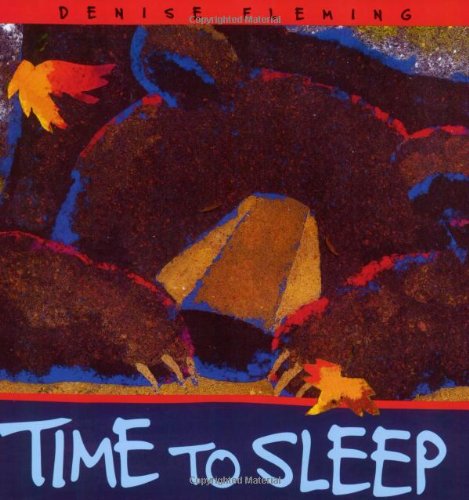
 Last week was all about bears and hibernating. In addition to making our bear caves, we talked about different animals that hibernate using the book Time to Sleep and a few other non-fiction books that I have.
This is a great book for practicing the comprehension skill of retelling, so we put the animal words in order of their place in the book.
We also used these words for some beginning sounds practice and in our predictable reading chart.

The kids wore their pajamas one day and we also made some simple bear hats.

One of our favorite activities was pretending to hibernate and sleep like bears.
This bear cave fort was a favorite last year, so I built one again this year. I sang the song below while the kids went to "sleep" in the cave and then woke them up by saying "It's spring! It's spring!"

(Tune: Are You Sleeping?)
Bear is sleeping, bear is sleeping
In the cave, in the cave
Wonder when he'll wake up, wonder when he'll wake up
In the spring, in the spring

It was also fun to pretend to sleep like other animals that hibernate- curling up like snails, tucking in shells like turtles, or hanging upside-down like bats. 

Finally, we wrote in our journals about bears. It's been a fun topic to study.

Saturday, October 17, 2015

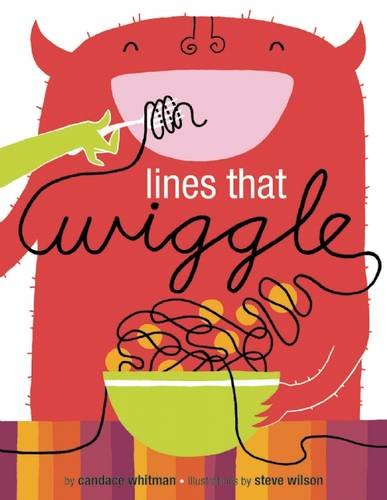
Book Love: Lines that Wiggle

I am always looking for good literature to support the topics that we are exploring in our classroom. More often than not, I find myself adapting books slightly to meet the needs of my age group or to fit the specific focus that I am trying to emphasize. But every once in awhile, I find a book that is EXACTLY what I'm looking for.
Title: Lines that Wiggle
Author: Candace Whitman
Illustrator: Steve Wilson

Why I Love this Book: I came across Lines that Wiggle as I was searching for some new ways to teach about working with lines as an early literacy skill. The text in this book is simple, which allows the creative and whimsical illustrations to shine. The lines in the book are raised, offering an additional tactile experience for the reader. Some of the lines are a part of pictures that are more imaginative, while some point out lines on real-life objects, such as leaves, sprouts, and animals. I loved that this book drew attention to different kinds of lines in fun and yet meaningful ways. For my teaching purposes, it is a perfect book to introduce lines to my students and get them excited about noticing them before we focus more exclusively on how lines make up letters, numbers, and shapes.

Read-Aloud Tip: This book lends easily lends itself to incorporating movement as you read. I encouraged my students to try to make different lines with their hands, arms, and bodies throughout the book. I used prompts like "Show me a line that wiggles!" or "Use three fingers to make a line in threes." 

Connection Activities: After we read the book, we did a quick "line hunt" to find lines in the classroom. It only lasted a few minutes, but there was a lot of enthusiasm and excitement about realizing that lines are everywhere!

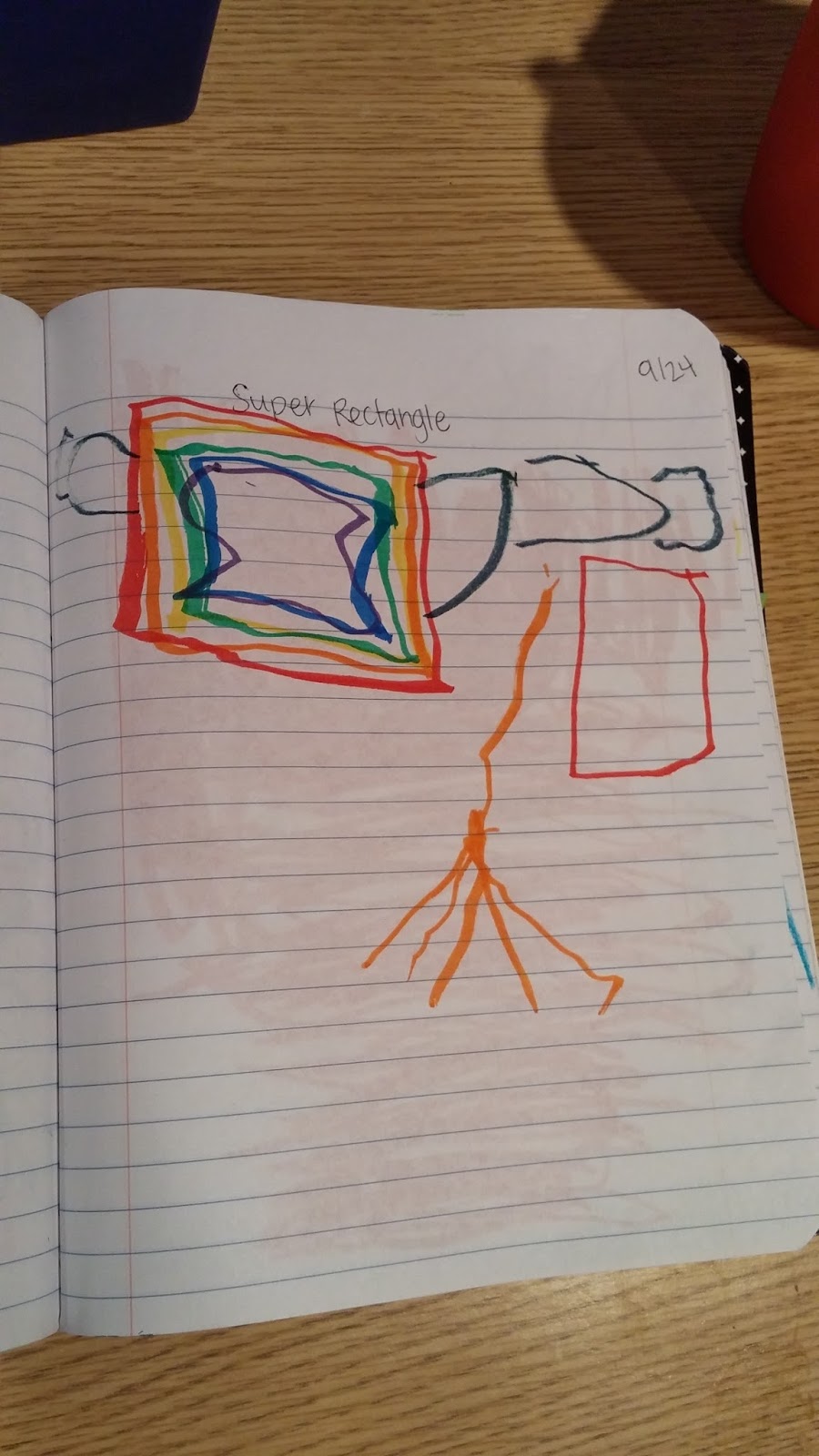
There are a lot of different ways you could turn lines into art, but we chose to do a line page in our writing journals. The students used lines to draw anything they wanted, and then told me about what they created.

Thursday, October 1, 2015

Math Bags and Writing Journals

This year I decided to change up my end-of-the-day routines to include math and writing on a regular basis. As with all the regular routines that I use in my classroom, I wanted these routines to be simple enough to be consistent, but also allow room for growth and individualization.

Math Bags
I found this idea for Math Bags on my favorite preschool blog, Teach Preschool, and wanted to try it out this as our weekly math routine. I love it because it is simple, very open-ended, and it allows the kids to be invested in the manipulatives we are using. So every Tuesday the students are bringing in up to 5 small, miscellaneous items from home that they are willing to donate to what we've been calling our "Math Collection."

First, everyone gets a chance to share what they brought, like a mini show-and-tell. This part of the process is a great chance for the kids to practice their oral language skills, and hopefully develop confidence with math vocabulary as the year progresses as well. Sometimes the kids will share stories with us about where they found the items, and sometimes they will just tell us what they brought. I always encourage them to count and tell us how many items there are, which allows me to observe their development of number sense and one-to-one correspondence.

How we interact with the items after the sharing time will vary throughout the year. Right now we are focusing on careful counting strategies, like lining the items up and touching them as we count.

This week we added sorting to the routine, and organized the items by color.

So far, I feel like it has been a successful routine and I'm excited to watch it grow and adapt as the students build their mathematical understanding. As our collection grows, I am also planning to include the items for different math activities in center choices time as well.

Writing Journals
The second routine that I've added to the end of the day is writing in our journals on Thursdays. Their writing journals are always available to them during center time, and many students use them on a regular basis for their own creative purposes. But I wanted to devote some additional time to writing about common learning topics together so that students could learn from each other and we could focus on specific writing skills where appropriate. 

Of course, writing in preschool is very developmental and can be as simple as making marks on the page. No matter the stage of writing development among my students, I emphasize the meaning behind whatever they are scribbling, drawing, or trying to write by asking them to tell me about their work. Then I model the writing process by recording what they tell me on the paper. 


This is also a great way for me to check in with the information they are processing and learning from our theme units. For example, today I prompted the students to write about sunflowers today since that has been our focus topic. It was interesting to hear the different aspects of sunflowers that each student focused on as they told me about their writing. Some told me about how the seeds come from the head of the flower, and some told me about the parts of the flower like the petals and the long, green stem, etc. 


As a teacher, I love using writing journals consistently because it is such a visual way to document growth over time. It's such a simple routine, and I'm glad that I've found a regular place for it in our weekly schedule. 

Saturday, May 16, 2015

Our Butterfly Books

Throughout our butterfly unit, we took time almost every day to write about the things we were learning.

Each of my students are working on different stages of pre-writing development, just as they should be at this age. This was a great process to let them apply their developing skills within a meaningful context.


First, we wrote about caterpillars:

I always encourage the students to tell me what words to write for their picture or markings. This helps them to understand that what they write has value, meaning, and purpose. It also models the act of writing words to represent thoughts and ideas. And if students are interested and ready to write words and letters on their own, I of course encourage those efforts as well.
Then we wrote about caterpillars forming a chrysalis. You might notice a lot of 'J' shapes in these pages because we talked a lot about and observed our caterpillars hang in the shape of a 'J' before forming their chrysalis.
Then we did a couple different butterfly pages.
For one of the pages, I demonstrated how to draw the basic shapes of a butterfly and we all tried to draw one together that looked like the ones we had raised.
Finally we did some coloring, cutting, and gluing for a page depicting the butterfly life cycle.
Related Posts Plugin for WordPress, Blogger...