Showing posts with label Favorites. Show all posts

Monday, January 18, 2016

Hibernation Celebration

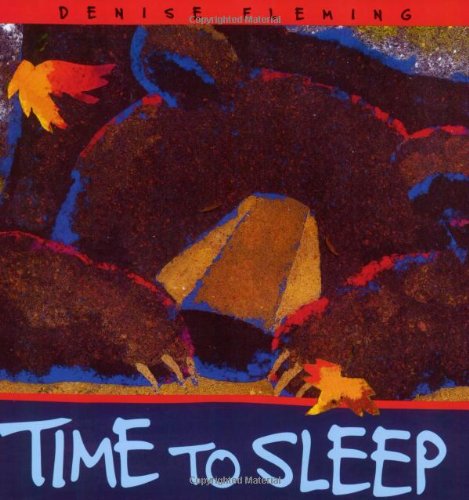
 Last week was all about bears and hibernating. In addition to making our bear caves, we talked about different animals that hibernate using the book Time to Sleep and a few other non-fiction books that I have.
This is a great book for practicing the comprehension skill of retelling, so we put the animal words in order of their place in the book.
We also used these words for some beginning sounds practice and in our predictable reading chart.

The kids wore their pajamas one day and we also made some simple bear hats.

One of our favorite activities was pretending to hibernate and sleep like bears.
This bear cave fort was a favorite last year, so I built one again this year. I sang the song below while the kids went to "sleep" in the cave and then woke them up by saying "It's spring! It's spring!"

(Tune: Are You Sleeping?)
Bear is sleeping, bear is sleeping
In the cave, in the cave
Wonder when he'll wake up, wonder when he'll wake up
In the spring, in the spring

It was also fun to pretend to sleep like other animals that hibernate- curling up like snails, tucking in shells like turtles, or hanging upside-down like bats. 

Finally, we wrote in our journals about bears. It's been a fun topic to study.

Tuesday, October 27, 2015

Spiders and Webs

Along with some Halloween activities this week, we've also been learning a little bit about spiders.

"Spider Eyes" Sensory Bin and Counting
The first part of this activity is scooping up the googly spider eyes from the bin.
Some students were engaged with that process alone, and spent their time just exploring the bin. 
Some students took it a step further, and brought their eyes to the spider building table. 

Earlier in class we talked a little bit about the number of legs and eyes that spiders can have. Many spiders have 8 eyes, but that number can vary depending on the species. It was fun to see the different ways that the students made their spiders.

Spider Web Marble Art
This is one of my favorite art processes. Just dip the marble in paint, and roll it around to create a unique web.

Later we added some spiders. 

Spider Web Lines
Spider webs have been another fun way to think about lines. We explored the straight and curvy lines in spider webs on the chalkboard table. I drew the outline of the web, and the students filled in the rest. 

This inspired one student to try making his own web with the chalk outside. 

Spider Web Yarn 
I had planned to make several different spider webs out of yarn in the classroom to use for a spider hunting/counting/sorting activity, but it was hard to find places that would work.

So I changed my mind, emptied out this shelf, and set out several different strings for the kids to explore on their own. They worked hard to create their own spider webs. 


Book: The Very Busy Spider by Eric Carle
This is a simple and fun book that shows the process a spider might go through to spin their web. I love that the lines of the web are raised, so that students can explore the lines in a tactile way.

Tuesday, September 22, 2015

Are You as Tall as a Sunflower?

Another plant we've been exploring in my yard this fall is sunflowers. I had two sunflower plants mature and bloom this year.

By the time school started, both had started to droop and dry out. We've been checking every school day to see if the seeds in the middle are ready to harvest yet.

We decided to make some big sunflowers for our classroom. Last week we measured the height of our sunflowers using string. We also worked together to paint some large pieces of paper yellow so we could make the petals.

Over the weekend, I put the flowers together and hung them up on the wall.
Then every student had the chance to stand underneath one of the flowers to compare their height with both the sunflower and the other students in the class. We did this by writing our name on a green paper leaf, and using that leaf to mark the height along the stem of the flower.


Thursday, September 17, 2015

Early Pumpkin Harvest

Last spring, my husband and I planted our first garden. We decided to start small, and only planted a few different things to try out. Among some other produce, I wanted to plant some pumpkins and sunflowers that I could use with my preschool class. It has definitely been a learning experience for us. Out of the 12 sunflower sprouts that I planted, only 2 survived. The pumpkin plants were doing awesome until this last month, when all of our squash plants developed a powdery fungus on the leaves and started to die. Thankfully there were already plenty of Jack-Be-Little pumpkins growing before that happened.


Although I had planned to wait until October, the preschool kids didn't mind at all that we harvested them a little early due to the dying plant. They were eager to jump in and find a pumpkin...or two...or five...to pick.


Through this activity, we were able to observe and experience:
  • how pumpkins are attached to the vine as they grow
  •  how they turn different shades of yellow/orange as they mature
  • how to twist and pull a pumpkin off the vine
  • that the stem is what's left of the vine after you pull it off 
  • that pumpkins can be a bit dirty because they are sitting on the ground as they grow

We ended up with quite a large collection of pumpkins! After our two days of harvesting, we took a final count.
Exactly 30 pumpkins!

Honestly, I was a bit surprised at just how many there were, but I'm excited there are so many for us to use and explore this fall! 

Tuesday, April 28, 2015

Caterpillars and Chrysalides

Our caterpillars kept eating and growing, and over the weekend they all formed a chrysalis. Now we are just waiting for the butterflies! Here are a few of the learning activities we've been doing alongside observing our live friends.

Caterpillar Stamping Art


Butterfly Writing Journals
I plan to do a more detailed post about these journals once we are finished, but we have been "writing" in these journals every day about the things we are learning. 

Small World/Dramatic Play
I made these little caterpillars by twisting to pieces of pipe cleaner together. The kids created all sorts of dramatic play games using these and some small play butterflies. Here they are trying to get their caterpillars to hang upside down in a "J" shape, like ours did when they were getting ready to form a chrysalis. 
It was exciting to watch two of our caterpillars get into the hanging "J" position while we were in class.  


Lots of Butterfly Books
We have been reading lots of books about caterpillars and butterflies. The Very Hungry Caterpillar is a classic, but I also love Ten Little Caterpillars by Bill Martin Jr. It is great for talking about different kinds of caterpillars, and the various things that a caterpillar might do or encounter in its brief life. 

We practiced counting and subtraction skills while we read, as we took away caterpillars for each page. 

Chrysalide Observation
After about a week, we were able to observe the caterpillars in chrysalis form. 


 Once the chrysalides were hard enough, we carefully moved them to the butterfly habitat, in preparation for the butterflies. This gave us the opportunity to look at them a little more closely. 

Next week we should be able to see how they've changed into butterflies!

Tuesday, March 10, 2015

On the Go

We have been on the go in our classroom this month, exploring things and people that we see in our neighborhood. Here are a few of the ways we've been learning with things that go in our community.

Construction Sensory Bin
(With kinetic sand, solid shapes, and construction vehicles)
The kinetic sand was so great for discovering the flat shapes that make up solid shapes. 

Car Painting and Washing- Art & Sensory Play

Fine Motor Races

Dump Truck Letter Rock Matching

Train Car Adding and Counting Games

Tuesday, January 20, 2015

Polar Bear Art: Preschool Style

One of my students this year loves polar bears. Because I know this student loves polar bears so much, I've been really excited to use them as a focus topic during our winter unit. Today we tried out a step-by-step art project to create polar bears. I was inspired by this art project. It was completed by older students and I didn't have the same pastel chalk that they used, but I did my best to adapt it for our classroom.
I thought the results were really fun, and so great for preschool art. I love that even though I took the students step-by-step through the shapes, each bear turned out so differently. 
We had also been experimenting with white crayons and watercolor paint, so some students chose to use that as a background for their polar bear. (Although, if I did the project again, I would stick with a more solid background next time, like the examples I was looking at.)


Related Posts Plugin for WordPress, Blogger...