I thought Penguin and Pinecone by Salina Yoon was a perfect story for us as we've been discussing friendship, kindness, and love for Valentine's Day coming up.
It is a sweet story that in many ways mirrors young children's curiosity and imagination, as well as their ability to love and give whole-heartedly.
Read-Aloud Tip: I gathered up some pine cones for my class to hold and explore during the read-aloud, much in the same way Penguin does in the story. As the story went along, we also acted out some of the activities that Penguin and Pinecone do together.
Connection Activity - Craft: After the story, I helped the students to make their own friends out of the pine cones they chose. I used hot glue to put eyes and a heart on each one. Then one student suggested we make a scarf, like Penguin did in the book. So we also used yarn to make a little scarf.
The kids were pretty excited about their new pine cone friends. :)
Connection Activity - Social-Emotional Thinking: Later in the day, we revisited the story and the concept of friendship. Penguin did many things to give kindness and love to his new friend Pinecone. We talked about ways that we can be a kind and loving friend, and then each student drew a picture and told me something they could do.
Tuesday, February 10, 2015
Frozen Hearts Sensory Play
I used two bread pans and a bunch of foam and plastic hearts that I found at the Dollar Tree to create this icy cold sensory bin.
I placed the objects in the pan with water, and stuck it in the freezer. The foam hearts floated to the top of the pan and the plastic hearts sank to the bottom of the pan, which would work for this activity, but I wanted more of a layered feel. So after that first part had frozen, I added another layer of water and objects. I suppose you could do that with even smaller layers than I did if you have the time, and want the objects to be evenly dispersed throughout the pan.
It was very easy to get the ice block out of the pan. I just ran the bottom of the pan under some water, and within a few seconds it cracked and I was able to slide it right out into the sensory bin.
I made two for my class to explore, and provided some spray/squeeze bottles filled with warm water and paintbrushes as possible excavation tools. I encouraged them to think of other ways they could melt the ice and release the frozen hearts, and some students brought objects from other parts of the room to try out as well.
The bin was open for about an hour or so, and the students kept coming back to it in between other activities. The blocks were only about half melted when center time was over, and so we put them back in the freezer to use again next time.
On a side note, the larger foam hearts in the bin were just there for added play as it filled up with water. We ended up sticking the wet hearts to some glass surfaces near the bin, just for fun.
I placed the objects in the pan with water, and stuck it in the freezer. The foam hearts floated to the top of the pan and the plastic hearts sank to the bottom of the pan, which would work for this activity, but I wanted more of a layered feel. So after that first part had frozen, I added another layer of water and objects. I suppose you could do that with even smaller layers than I did if you have the time, and want the objects to be evenly dispersed throughout the pan.
![]() |
| My little guy loves hearts right now, and insisted on exploring the ice block while I was setting up for class. "Ha-ut!" he says. |
I made two for my class to explore, and provided some spray/squeeze bottles filled with warm water and paintbrushes as possible excavation tools. I encouraged them to think of other ways they could melt the ice and release the frozen hearts, and some students brought objects from other parts of the room to try out as well.
The bin was open for about an hour or so, and the students kept coming back to it in between other activities. The blocks were only about half melted when center time was over, and so we put them back in the freezer to use again next time.
On a side note, the larger foam hearts in the bin were just there for added play as it filled up with water. We ended up sticking the wet hearts to some glass surfaces near the bin, just for fun.
Thursday, February 5, 2015
Paper Heart Scissor Skills
This week we used paper hearts to practice our scissor skills. First we made heart puzzles or broken hearts by cutting lines down the middle of the heart. I made the hearts with a variety of sizes and lines, because each of my students are at different stages of fine motor development. The small hearts with straight lines were best for those that are still building muscle strength and confidence with scissors, and the larger ones with curved or zig zag lines were a good fit for others.
Some students were ready to try cutting hearts from folded pieces of paper. This task is more complicated then it might seem because you have to control the direction of the scissors while simultaneously turning and adjusting the paper at just the right time.
I was really proud of the students that kept trying even though the shape didn't always turn out perfectly.
Some students were ready to try cutting hearts from folded pieces of paper. This task is more complicated then it might seem because you have to control the direction of the scissors while simultaneously turning and adjusting the paper at just the right time.
I was really proud of the students that kept trying even though the shape didn't always turn out perfectly.
Tuesday, February 3, 2015
Kindness Builds Happy Hearts
Dr. Jean shared this social story and activity on her blog, and I decided to adapt it for my class this year. I like that it is a very visual way to think about how our actions affect others around us.
To make it a bit more interactive, I gave each student a paper heart and another paper with an outline of the heart that said: "Kindness builds happy hearts."
Then I made up my own social story about a student going to preschool. In the story, a new student came to preschool and encountered some of the same challenges that my students do. This student wanted to play trains, but his friend wouldn't share. Then he was feeling angry and sad, so he grabbed the trains out of his friend's hands. (and so on...)
We talked about how those challenging things made his heart feel sad and hurt and small, and so each time something hard happened, we ripped a piece off of our paper heart.
I included both situations where someone else's unkind actions hurt the student, and where the student's own unkind choices made him feel sad as well because it definitely goes both ways.
After our hearts were all torn and broken, we turned the story around. We went back through the story and asked how we could fix or build up his heart again. As we thought of ways to be kind to our friends, we glued pieces back onto our hearts.
The fact that it was hard to fit the pieces of the heart back together again was also a visual for the impact that unkind actions can have. We can't take back those actions or words, and it's not always easy to fix the hurt that we feel. But the more kindness we give, the more we build up everyone's heart- it not only helps our friend's heart, but our own as well.
To make it a bit more interactive, I gave each student a paper heart and another paper with an outline of the heart that said: "Kindness builds happy hearts."
Then I made up my own social story about a student going to preschool. In the story, a new student came to preschool and encountered some of the same challenges that my students do. This student wanted to play trains, but his friend wouldn't share. Then he was feeling angry and sad, so he grabbed the trains out of his friend's hands. (and so on...)
We talked about how those challenging things made his heart feel sad and hurt and small, and so each time something hard happened, we ripped a piece off of our paper heart.
I included both situations where someone else's unkind actions hurt the student, and where the student's own unkind choices made him feel sad as well because it definitely goes both ways.
After our hearts were all torn and broken, we turned the story around. We went back through the story and asked how we could fix or build up his heart again. As we thought of ways to be kind to our friends, we glued pieces back onto our hearts.
The fact that it was hard to fit the pieces of the heart back together again was also a visual for the impact that unkind actions can have. We can't take back those actions or words, and it's not always easy to fix the hurt that we feel. But the more kindness we give, the more we build up everyone's heart- it not only helps our friend's heart, but our own as well.
Sunday, February 1, 2015
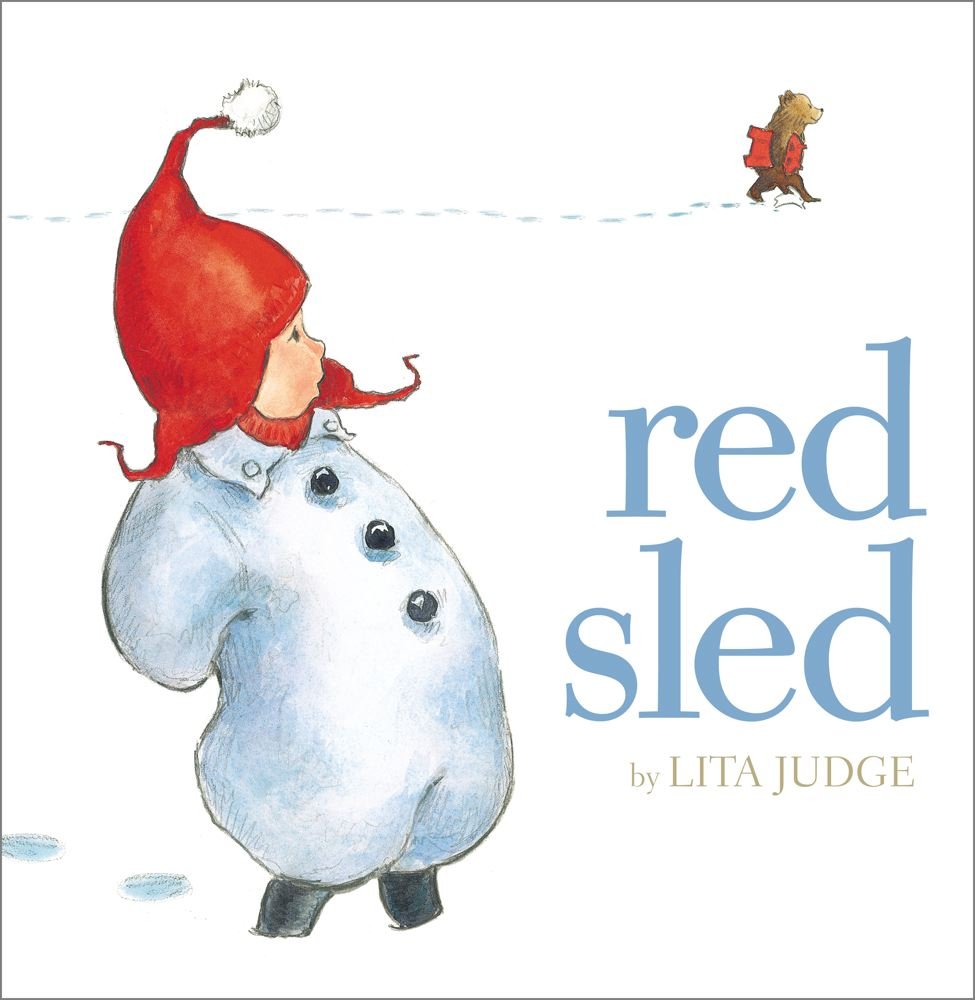
Book Love: Red Sled
| Red Sled by Lita Judge |
This book was a new find for me this year, and I think it is really fun. I used it while we were talking about animals in the winter time, as an example of a pretend animal story (in contrast to the non-fiction books we also read). In the book, a bunch of woodland animals have an adventure together using a red sled that they found. The story is told mainly through the illustrations, with simple sounds used for the text. I love the contrast in the illustrations between the winter background and the colors of the sled and characters.
Read Aloud Tip: Involve the students in making the sounds on each page and acting out some of the motions in the story, such as tromping through the snow like a bear or pretending to speed down a hill on the sled. You could also invite students to help tell the story and describe what they think is happening on the page. What are the characters thinking, feeling, or doing? Books like this are so great for encouraging students to develop their language and comprehension skills as they expand on the pictures and tell the story in their own words.
Subscribe to:
Posts (Atom)