Tuesday, October 13, 2015

Pumpkin Lines

I learned something new about pumpkins this year, from a book that I checked out from the library for our pumpkin study this month. How Many Seeds in a Pumpkin? follows a school class that tries to determine which pumpkin (of 3 different sizes) has the most seeds inside. The class is surprised to find out that the smallest pumpkin had the most seeds, and discovered that that same pumpkin also had the most lines on the outside. Did you know the number of lines on the outside of a pumpkin is correlated to the number of seeds inside? Apparently the longer a pumpkin stays on a vine, the more lines it develops along with the seed strings inside. I never knew!
I was excited to draw attention to the lines on the pumpkins because recognizing lines is an early literacy skill that I especially focus on during the first half of the school year. After I read the story with the class, we counted lines on lots of our pumpkins and made guesses about which ones would have more or less seeds. We discovered that many of our pumpkins had the exact same amount of lines- which makes sense considering we harvested all of the pumpkins at the same time, so many of them had been growing for the same amount of time.

Last week we did some crayon resist, watercolor art and used lines to learn to draw the shape of a pumpkin. First we used a round line to draw a circle, and then we put curved lines inside of it.

After drawing the outline with crayon, we filled in the pumpkin with watercolors. 
Every pumpkin turned out differently- some with lots of lines and some with lots of colors!
I loved how this simple process was another way to think about the lines on a pumpkin.

Thursday, October 8, 2015

Dot Art

It was our 10th day of preschool today, and so we read the book Ten Black Dots, by Donald Crews, as part of our morning counting routine.

I put out dot markers and other utensils at the art table during center time to see if it might inspire any counting or dot art. For me, preschool art is more about letting the students experience the process of making art, rather than being worried about the finished product. So while the book models using dots as part of a larger picture, most of the students just seemed to just enjoy putting dots on the page.


Although, if you asked them to tell you about their pictures, many were able to identify some sort of meaning behind what they created.
One student moved onto using regular markers, and discovered she could make dots using those as well.


Monday, October 5, 2015

Exploring Sunflower Seeds

One of my sunflower plants finally dried out enough for the seeds to come through the heads. I was excited to put them out for the students to explore.
The students used their fine motor skills to pull the seeds from the plants.
They also spent time looking carefully at how the seeds fit into the head, and what the seeds looked like.
These heads were small, but we still ended up with A LOT of sunflower seeds.

We read several different sunflower books about how seeds grow, but I love how the illustrations in Ten Seeds show the roots and the sprouts coming from the sunflower seeds. This is also a great book for counting and taking away from a set, so we used ten of our sunflower seeds to engage in that process during the story.

Since we had used all the heads on one sunflower plant, we pulled it out of the ground so we could see how the roots grew. One student asked, "Where's the seed?" because he remembered that the roots grew out of the seed. We couldn't find it, and now we want to learn more about what happens to the seed after it grows.

We are still waiting for the bigger sunflower plant to have seeds ready to harvest!

Friday, October 2, 2015

The Parts of a Sunflower

We explored the parts of a sunflower by making our own.

First we painted paper plates for our sunflower's head.
After they dried, we practiced our scissor snipping skills by doing a fringe cut around the edges to make petals.

Then we used Q-Tips to paint the seeds in the middle of the head. 


Then we hung them up with stems and leaves to make a sunflower garden.

 We also labeled our large class sunflowers with word cards.

Thursday, October 1, 2015

Math Bags and Writing Journals

This year I decided to change up my end-of-the-day routines to include math and writing on a regular basis. As with all the regular routines that I use in my classroom, I wanted these routines to be simple enough to be consistent, but also allow room for growth and individualization.

Math Bags
I found this idea for Math Bags on my favorite preschool blog, Teach Preschool, and wanted to try it out this as our weekly math routine. I love it because it is simple, very open-ended, and it allows the kids to be invested in the manipulatives we are using. So every Tuesday the students are bringing in up to 5 small, miscellaneous items from home that they are willing to donate to what we've been calling our "Math Collection."

First, everyone gets a chance to share what they brought, like a mini show-and-tell. This part of the process is a great chance for the kids to practice their oral language skills, and hopefully develop confidence with math vocabulary as the year progresses as well. Sometimes the kids will share stories with us about where they found the items, and sometimes they will just tell us what they brought. I always encourage them to count and tell us how many items there are, which allows me to observe their development of number sense and one-to-one correspondence.

How we interact with the items after the sharing time will vary throughout the year. Right now we are focusing on careful counting strategies, like lining the items up and touching them as we count.

This week we added sorting to the routine, and organized the items by color.

So far, I feel like it has been a successful routine and I'm excited to watch it grow and adapt as the students build their mathematical understanding. As our collection grows, I am also planning to include the items for different math activities in center choices time as well.

Writing Journals
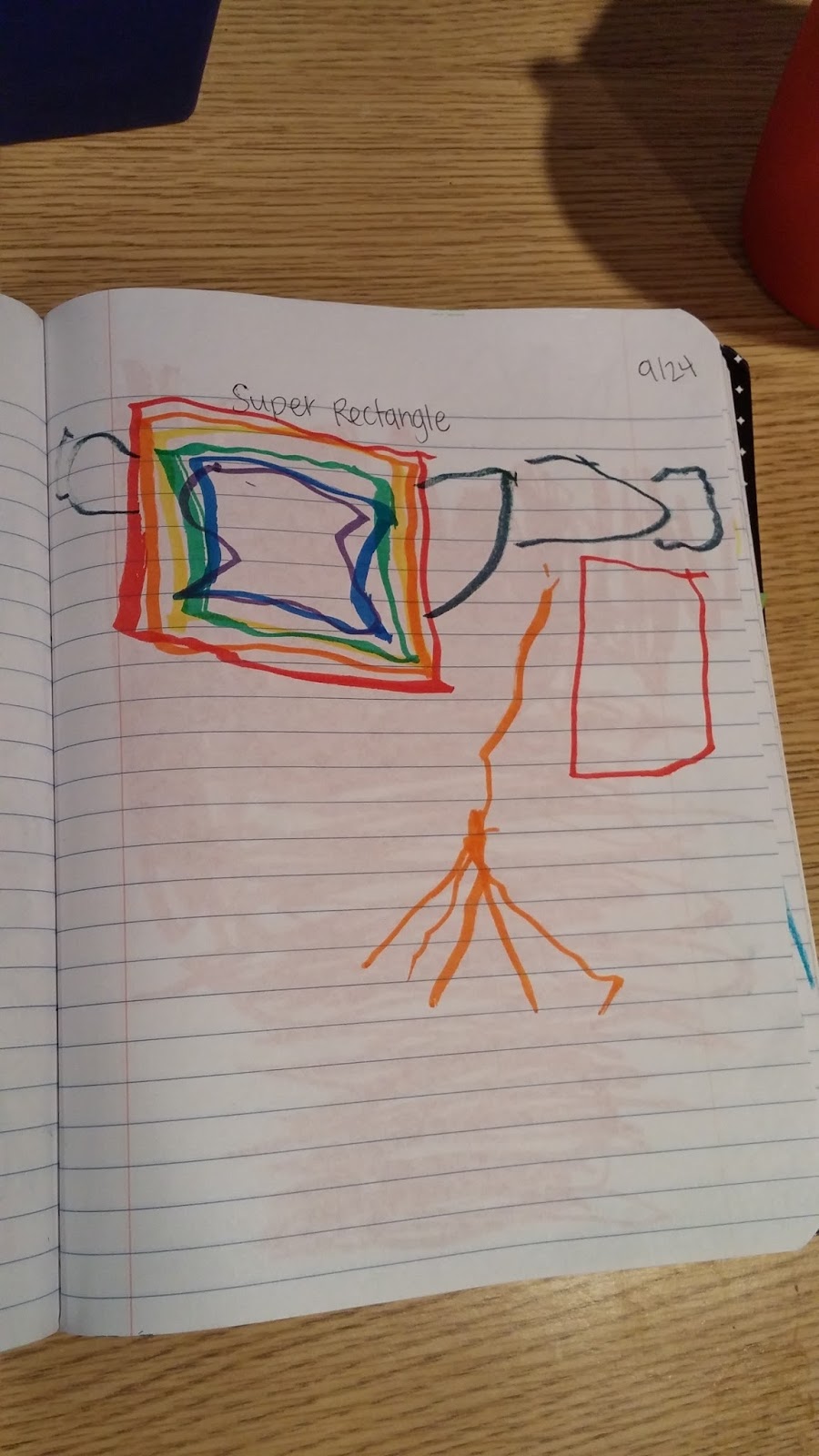
The second routine that I've added to the end of the day is writing in our journals on Thursdays. Their writing journals are always available to them during center time, and many students use them on a regular basis for their own creative purposes. But I wanted to devote some additional time to writing about common learning topics together so that students could learn from each other and we could focus on specific writing skills where appropriate. 

Of course, writing in preschool is very developmental and can be as simple as making marks on the page. No matter the stage of writing development among my students, I emphasize the meaning behind whatever they are scribbling, drawing, or trying to write by asking them to tell me about their work. Then I model the writing process by recording what they tell me on the paper. 


This is also a great way for me to check in with the information they are processing and learning from our theme units. For example, today I prompted the students to write about sunflowers today since that has been our focus topic. It was interesting to hear the different aspects of sunflowers that each student focused on as they told me about their writing. Some told me about how the seeds come from the head of the flower, and some told me about the parts of the flower like the petals and the long, green stem, etc. 


As a teacher, I love using writing journals consistently because it is such a visual way to document growth over time. It's such a simple routine, and I'm glad that I've found a regular place for it in our weekly schedule. 
Related Posts Plugin for WordPress, Blogger...